

Quick Answer
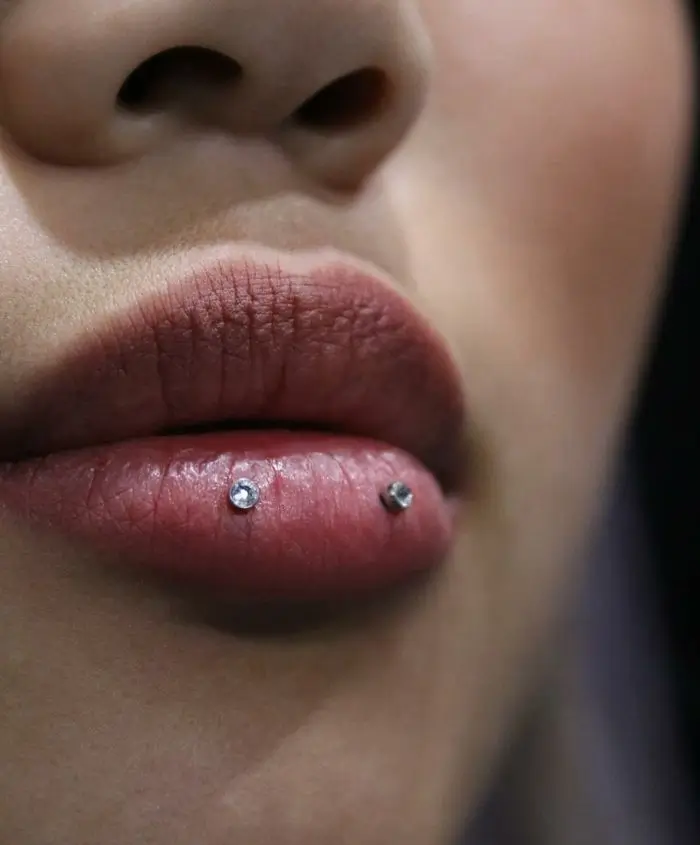
A horizontal labret usually means one piercing running sideways across the visible lip, with two ends showing. It is not a standard labret stud turned on its side. Because lips move constantly, this placement carries real migration and scarring concerns, and many professional piercers decline it. No healing timeline, pain score or jewelry swap solves that; get an in-person assessment first.
Key Takeaways
- “Horizontal” describes the path through the tissue, not just two beads sitting side by side in a photo.
- A sideways lip channel, a standard labret and a vertical labret are three different piercings with different risks.
- Clean tools and a skilled piercer do not remove the mechanical problem of a lip stretching over a sideways bar.
- Fresh, painful, swollen, infected, irritated or migrating piercings need a professional piercer or qualified clinician, not trial-and-error jewelry changes.
- If a piercer recommends an established placement instead, compare its specs in the lip jewelry collection; a category page does not approve a piece for a horizontal channel.
What is a horizontal labret piercing?
The term usually means a single channel running sideways through the visible lip, most often the lower lip, so two jewelry ends sit next to each other. The name is used loosely online: some pages also call a standard labret “horizontal” because its post runs from outside toward the inside of the mouth. Confirm which one a source means before comparing advice.
A photo of two beads does not tell you which placement you are looking at. It could be one sideways channel, two separate piercings, or something else. The visible ends say nothing about depth, angle or how the channel relates to the mouth. You may also see the same idea sold as a “horizontal lip piercing”; it is the same placement and the same concerns apply.
Is a horizontal lip piercing safe?
It should not be treated as a routine, low-risk option. In Unusual Lip Piercings, professional piercer Lynn Loheide advises against horizontal channels across the lip, citing movement, migration, scarring and effects on speech and eating. That is an attributed professional opinion, not a measured complication rate.
The key point is that hygiene and mechanics are separate issues. Sterile equipment covers the procedure. It does nothing about a lip that stretches wide when you smile and puckers when you talk, with all of that movement happening across the bar. A claim that the piercing is safe “as long as a professional does it” skips that part.
A fresh photo also proves little about the long term. It shows one moment, not whether the tissue stayed put or the wearer removed the jewelry weeks later.
Horizontal labret vs standard labret vs vertical labret
A standard labret has an opening below the lip and a flat backing inside the mouth. A vertical labret runs up through the lip with both ends visible outside. A sideways channel across the lip is a third thing entirely. They are not interchangeable names for one piece of jewelry.
| Option | Best for | Caveat |
|---|---|---|
| Horizontal channel across the lip | Understanding what a reference photo shows | Movement, migration and scarring concerns make it a poor routine choice |
| Standard labret | Discussing an established below-lip placement with a piercer | The inside backing can contact teeth or gums; fit and follow-up still matter |
| Vertical labret | Discussing a different tissue path with a qualified piercer | Anatomy and fit still need assessment; not an automatic substitute |
| Two separate lip piercings | Getting a paired look without one sideways channel | Each placement needs its own assessment |
Describe the look you want and let the piercer suggest placements, including telling you no. If you end up with a standard labret, the jewelry is straightforward to compare: the cone end labret stud in G23 titanium is a 16G flat-back example, and the ball cone lip stud comes in 6–12 mm lengths. Match gauge and length to what your piercer fitted.
How painful is it, and how long does it take to heal?
There is no reliable pain score for this placement, and the brief sting of the procedure tells you nothing about comfort afterward. A low number on a ten-point scale would not make the placement advisable anyway; pain tolerance does not stop tissue from migrating.
The same goes for healing time. A range borrowed from a standard labret does not mean a sideways channel will settle. The APP aftercare guidance notes that a piercing can look healed outside while the inside is still fragile. That supports caution; it is not a timeline for this placement. If the channel is shifting, waiting longer is not automatically the fix.
Migration, rejection and scarring: what to watch for
Migration means the piercing changes position. Rejection means the body gradually pushes the jewelry toward the surface. Neither is the same as an ordinary bump or a sore day.
Watch for openings that move, less tissue covering the bar, the bar becoming more visible, or the angle changing. Any of these deserves a prompt professional look. Shortening the bar does not reverse the process, and buying different jewelry is not a substitute for an exam. Scarring is a separate consideration: removing jewelry does not guarantee marks fade, so weigh that before getting pierced, not after.
Aftercare and jewelry changes
General aftercare cannot rescue a problem placement. The APP advises keeping movement, friction and pressure to a minimum and having a qualified piercer handle jewelry changes during healing. Follow an individual plan from someone who has actually seen your piercing.
Know which instruction applies where. Mouth-rinse advice is for the inside of the mouth; it is not automatically right for an opening on the outside of the lip. Skip harsh products such as alcohol or peroxide, and leave the jewelry still rather than rotating it.
No material, gauge or bar shape removes the movement problem of a sideways lip channel, and there is no universal “horizontal labret size.” If you already have the piercing and want different jewelry, bring the product specs to your piercer and ask whether a change is appropriate. If their advice is to retire the piercing, a new bar is not an equivalent option.
Safety and when to ask a piercer
This is jewelry education, not medical advice. For fresh, painful, swollen, infected, irritated, migrating or anatomy-specific piercings, consult a professional piercer or qualified clinician. Increasing swelling, spreading redness, discharge with fever, embedding or persistent bleeding need prompt clinical attention. Difficulty breathing or swallowing needs urgent medical help.
An assessment may end in removal rather than a jewelry swap. If infection is suspected, ask a clinician whether to leave the jewelry in place rather than taking it out on your own to make the area easier to hide.
FAQ
Is a horizontal lip piercing safe?
A sideways channel across the lip should not be treated as a routine low-risk placement. Professional piercer Lynn Loheide specifically advises against it because of movement, migration and scarring concerns. Clean equipment does not eliminate those mechanical issues. Seek an in-person assessment rather than relying on a reassuring photograph or a seller’s description.
What is the difference between a horizontal labret and a vertical labret?
The names describe different tissue paths, not simply which direction the decorative ends face. A horizontal placement runs sideways across the lip, while a vertical labret follows a different route. Terminology online is inconsistent, so ask a piercer to identify the exact placement before comparing jewelry, risks or aftercare.
How bad does a horizontal labret hurt?
A universal pain rating would be misleading, and the brief procedural sensation does not predict long-term comfort or stability. Persistent or worsening pain should not be dismissed as the expected price of the look. Have an existing piercing assessed and seek clinical advice when symptoms suggest a medical problem.
How long does a horizontal labret take to heal?
There is no dependable deadline this article can promise. A schedule for a conventional labret cannot establish that a sideways lip channel will become stable, and a calm exterior does not prove complete healing. Ask a qualified professional about the actual condition rather than arranging jewelry changes around a generic week count.
What jewelry is used for a horizontal labret piercing?
Images can show bars with two visible ends, but that does not establish a suitable shape, gauge or wearable length. The word labret on a product page is not placement approval. Do not use jewelry shopping to address migration or pressure; have the piercing assessed before considering any replacement.
Can I change the jewelry myself?
Do not change a fresh, irritated, painful or shifting piercing yourself. A new piece can complicate an existing problem, and a different size does not resolve an unsuitable tissue path. Ask a professional piercer about jewelry decisions and involve a clinician when there are signs of infection or other medical concerns.
Editorial note
Editorial note: This guide is for jewelry education and shopping support, not medical advice. For fresh, painful, swollen, infected, irritated, migrating, or anatomy-specific piercings, consult a professional piercer or qualified clinician. Reviewed for sizing language, material safety wording, care boundaries, and product-selection clarity.


